Epistrophe melanostoma (Zetterstedt, 1843)
Identification
Identification difficulty = 4. 
 according to Ball & Morris, 20241
Biology
The larva of this species is not described, but other members of the genus are aphidophagous, associated mainly with trees, shrubs and tall herbs. Adults have been found where grassland, woodland and scrub occur together, and in woodland clearings where they visit flowers. They are reported to fly extremely rapidly (Speight, 1988)2.
Flight period
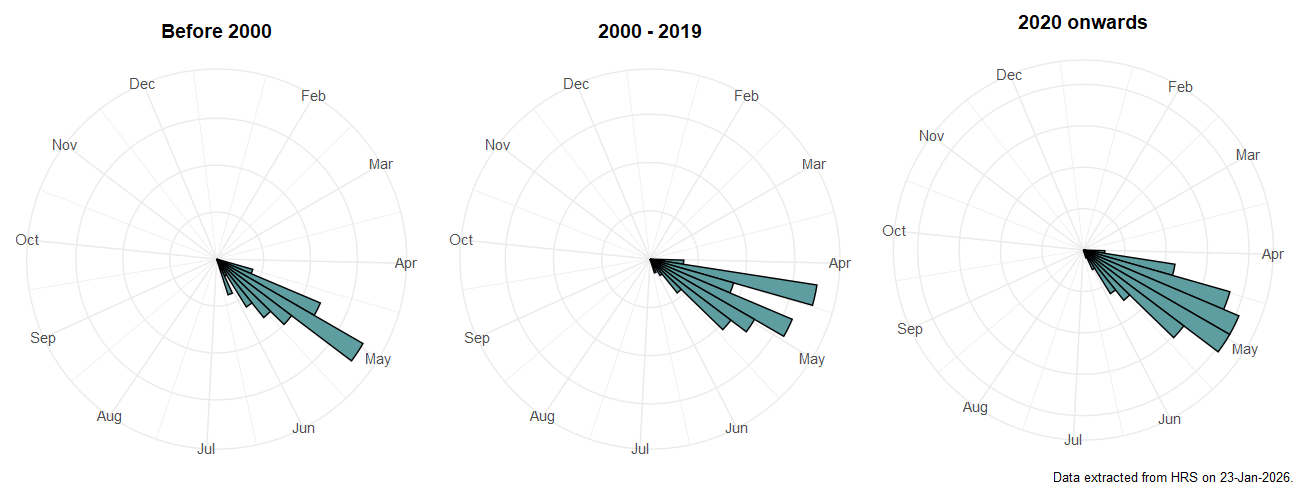
The following plots show the number of unique records per week excluding those reported to be of immature stages.
Status
Lower risk (Nationally scarce) - Ball & Morris, 20143.
Distribution
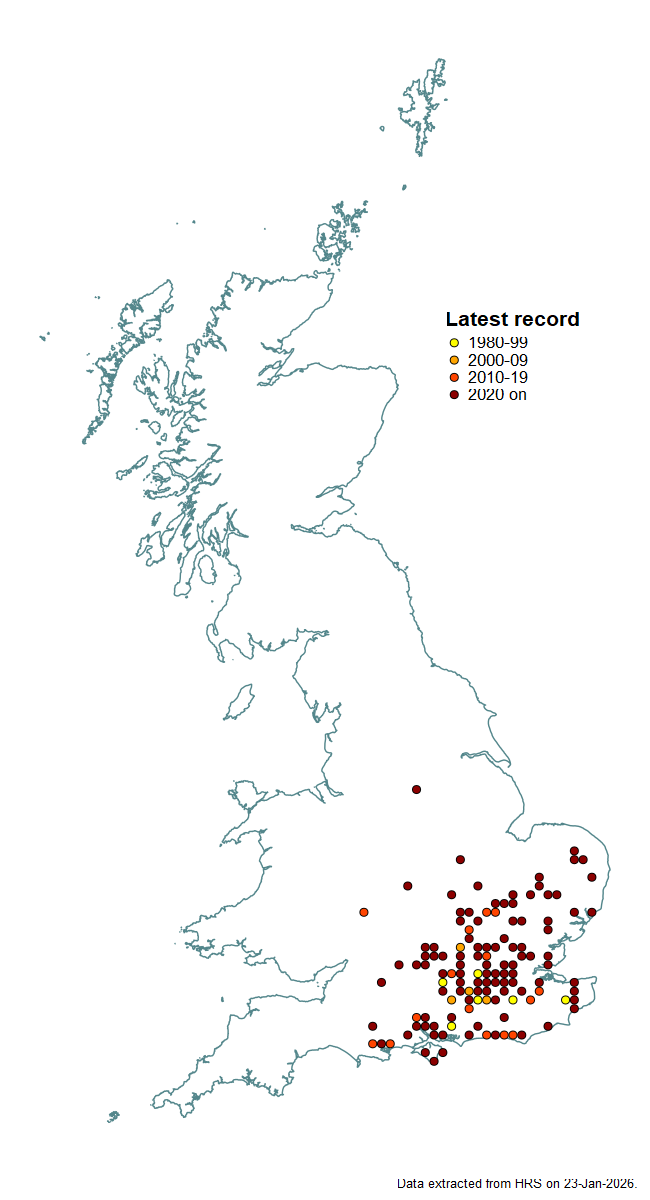
This is primarily a south-eastern species. These is some evidence that its range is increasing but it remains largely associated with Surrey and Sussex. It is quite likely to have been overlooked and perhaps mistaken for E. nitidicollis.
Trends
The following plots show the Frescalo TFactor vs year and a map of the rescaled frequency (all records) for the species.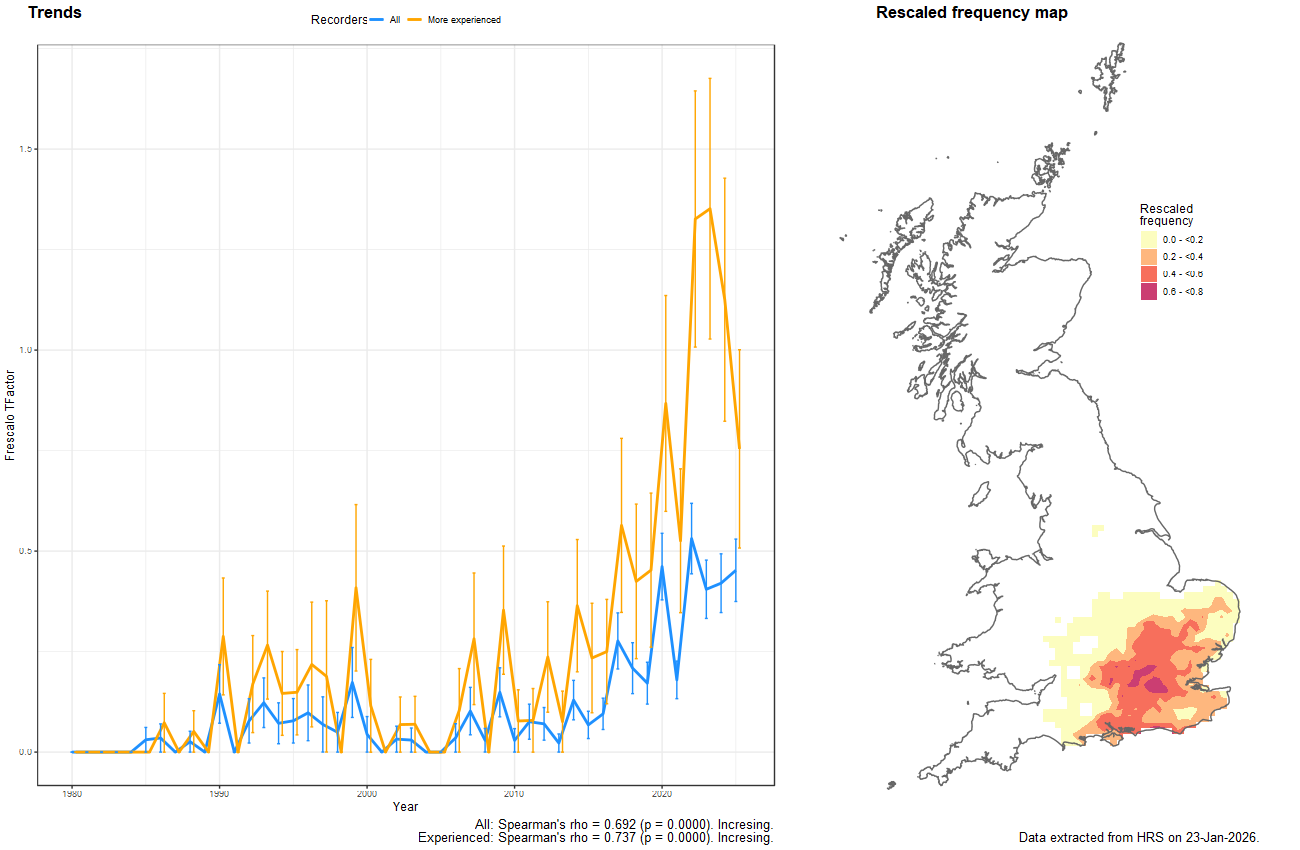
-
Ball, S., & Morris, R. (2024). Hoverflies of Britain and Ireland. WILDGuides (3rd ed.). Oxford: Princeton University Press. ↩
-
Speight, M. (1988). Syrphidae known from temperate Western Europe: potential additions to the fauna of Great Britain and Ireland and a provisional species list for N. France. Dipterists Digest (first series), 1, 2–35. ↩
-
Ball, S., & Morris, R. (2014). A review of the scarce and threatened flies of Great Britain. Part 6: Syrphidae. ( No. 9). Species status (pp. 1–130). Peterborough: JNCC. ↩