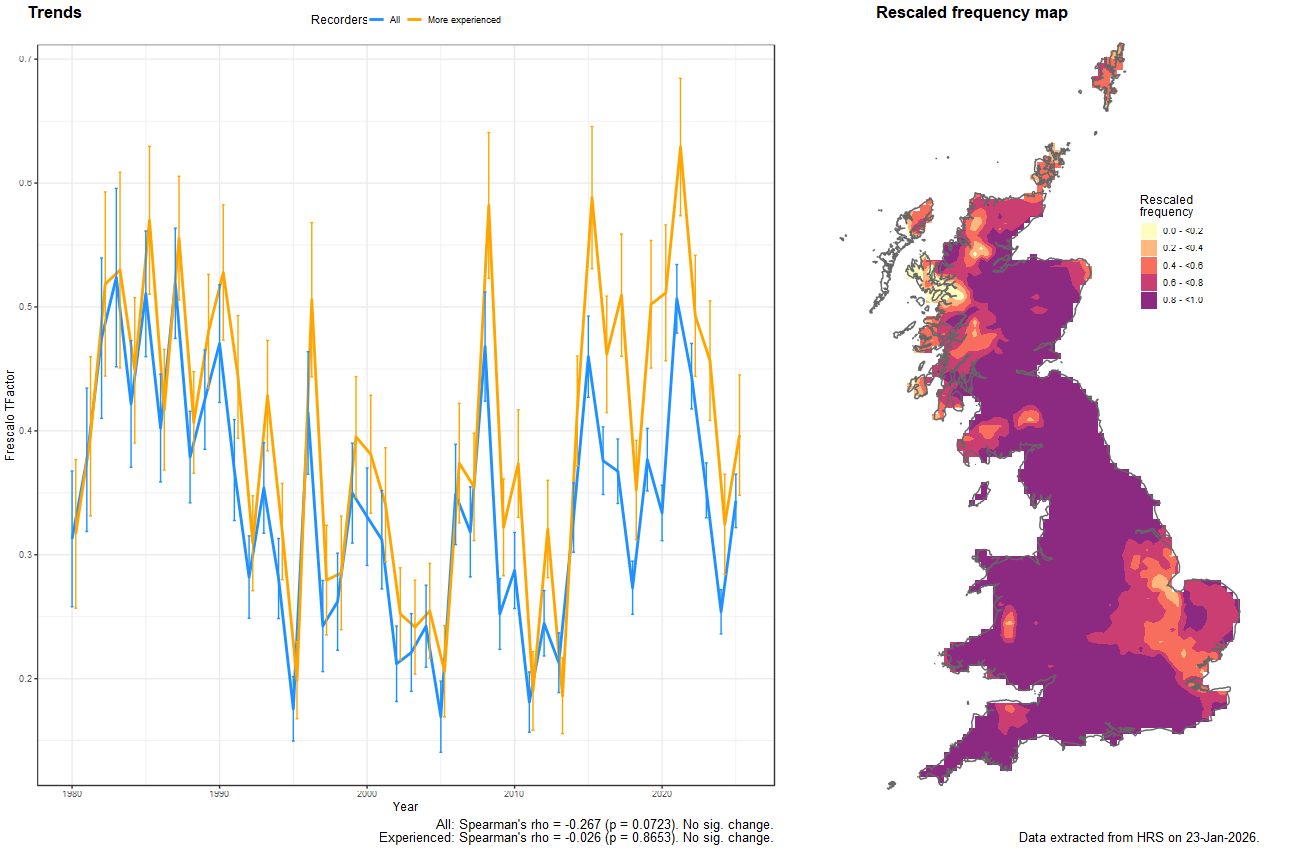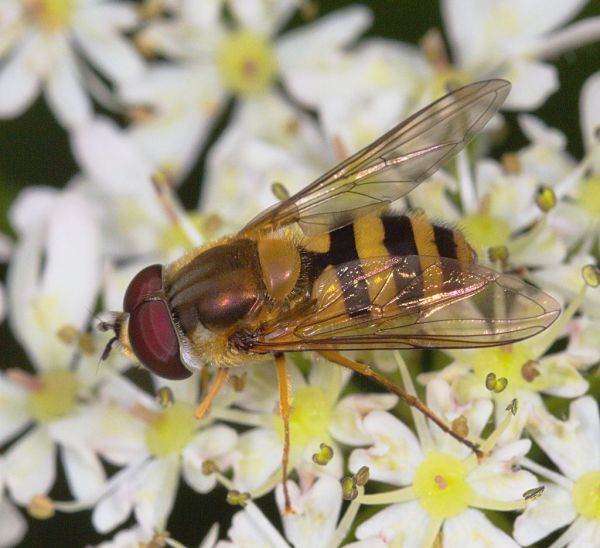
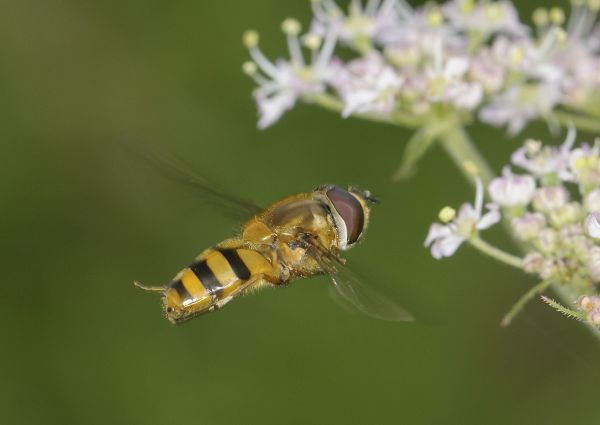
Epistrophe grossulariae (Meigen, 1822)
Identification
Identification difficulty = 2. 
 according to Ball & Morris, 20241
Synonymy
Syrphus grossulariae Meigen in Coe(1953)2.
Biology
This species is mainly recorded from deciduous woodland. The larva is frequently found feeding on aphids on Sycamore, Acer pseudoplatanus, but may also prey on other arboreal aphid species. Adults are usually found visiting flowers, especially white umbels and Devil's-bit Scabious Succisa pratensis along woodland rides and edges, scrub and around mature hedgerows. Males hover in clearings, over tracks, etc.
Flight period
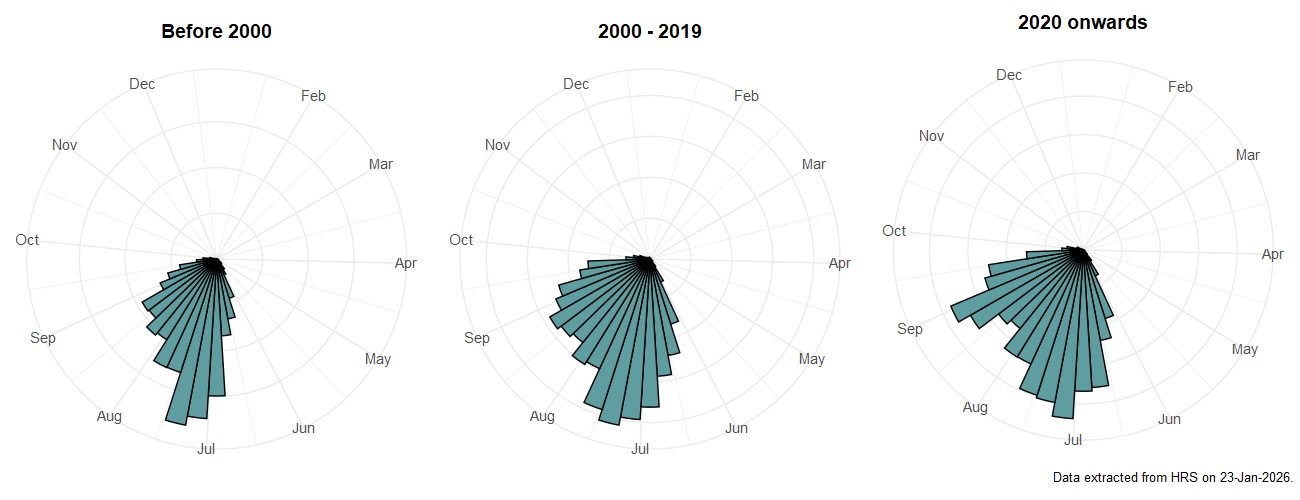
The following plots show the number of unique records per week excluding those reported to be of immature stages.
Distribution
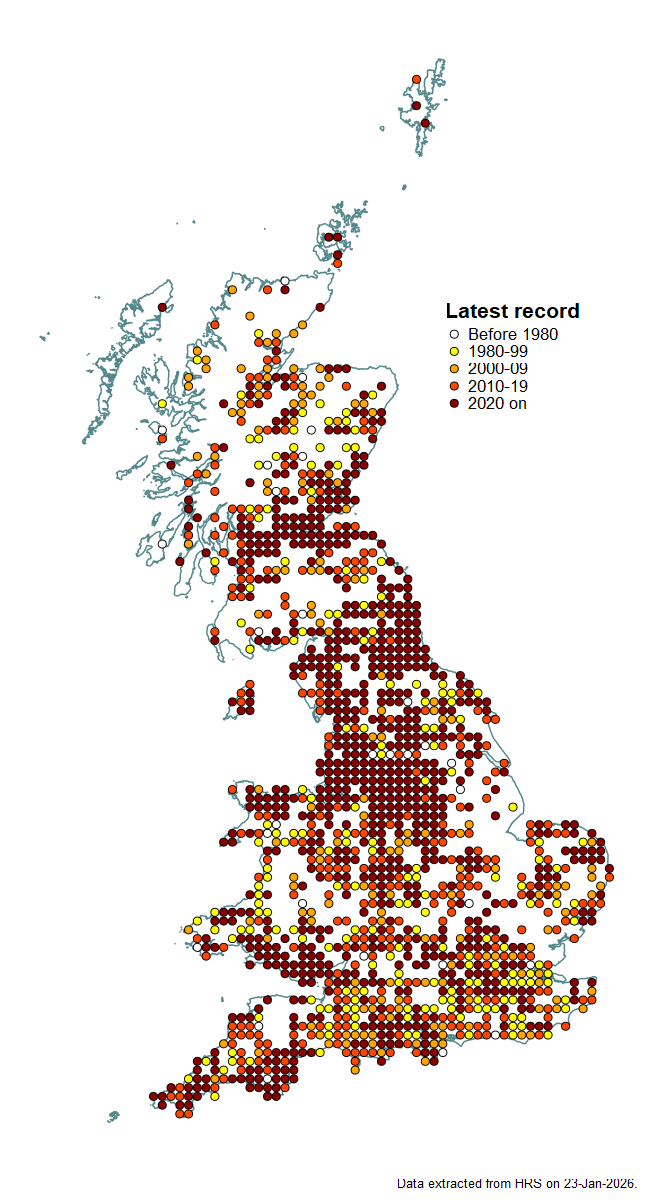
Widespread throughout Britain, but less frequent in eastern England. This species remains on the wing until October. This is a readily recognised species once known, but may be confused with Syrphus species when these are abundant.
Trends
The following plots show the Frescalo TFactor vs year and a map of the rescaled frequency (all records) for the species.